The Sons of Silas – Ballads of the Bairds
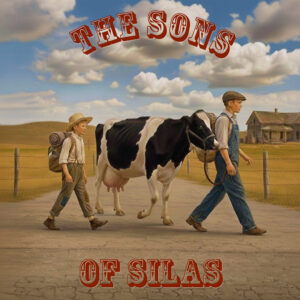
This album, while still squarely in the Scientific Gospel genre, is a bit different. This compendium is a reflection of the recordings we made in April 2024 with our son, Daniel, and our grandson, Noah (3 generations of Bairds – a true family affair.) We call them the Sons of Silas since the band title sounded good as an alliteration, even though Silas was Steve’s great grandfather, the father of Charles Baird who fathered Kenneth Knight Baird, Steve’s dad.
Ever the creative artist, Steve has, at age 80, undertaken another adventure in his life.
Who says 80 is too old?
The album was recorded at Spragueland Recording Studios and mastered by the incomparable Peter Sprague. Also, a departure from past albums, this one is only available digitally. You can find it on Apple Music, Amazon Music, and Spotify.
http://itunes.apple.com/album/id6777694974?ls=1&app=itunes
http://itunes.apple.com/album/id/6777694974
The Players
Stephen Miller Baird-composer, lyricist, vocals, guitar
Daniel Davidson Baird-guitar & vocals
Noah Reid Cherlin Baird-guitar, mandolin & vocals
Shawn Rohlf-bass, banjo, mandolin, harmonica
Brandon Wallace-fiddle, accordion, flute, harmonica
Jerry Waller-keyboard
Peter Sprague-guitar
Eliza Holland Madore-Vocals
Song Samples
Bannockburn
The Battle of Hanging Rock
One Cow Cattle Drive
The Compendium
If you have purchased the album or any of the songs, we present you with the Sons of Silas Compendium. In here you will find detailed history and descriptions of the songs as well as the lyrics.
The Spirits in the Cave
In the valley of the Dordogne River, in southern France, there are several caves that were once inhabited by Cro Magnon man, from about 35,000 (Pech Merle) to17,000 years ago (Lascaux.) The walls of some of these caves are covered with paintings of lots of the animals with whom the Cro Magnons lived. The caves were closed by earthquakes, then opened again in the same way in the 19th and 20th centuries. Scientists have subsequently discovered that the painters left some of their DNA behind. When making handprints, they would pack hollow bones with pigment then blow it onto the walls, leaving saliva-containing DNA behind. Because the closed caves were cold and dark, the DNA did not decay. It has been recovered and sequenced. To my amazement, some of my DNA haplogroups are on that wall. Some of my ancestors were cave painters.
A)
Shaman’s dreaming, spirits streaming, from the deep, dark cave.
Shaman sees them; to appease them, we must all be brave.
Cold and damp and flickering lamp and spirits all around.
Feel the forces, bulls and horses, waiting to be found.
See the deer, it has a spirit, hiding in the wall.
We’ve outlined it, so you’ll find it, now it’s clear to all.
Does that bison strike your eye, son? Look there, see its snout.
In that boulder, there’s a shoulder; we will draw it out.
B)
I will paint a horse I found right there for all to see.
And I’ll trace my hand above, so you’ll know it was me.
Fill the cave with paintings so their spirits can be seen.
Thank the Earth for lives they give with every hunting scene.
C)
Instrumental, 12 measures.
D)
Herds stampeding, frightened, bleeding, they have come alive.
Spirits thunder, fear and wonder, we pray we’ll survive.
Earth is shaking, fearful quaking, angry spirits shout.
Rocks are falling, Shaman’s calling, “Everyone get out!”
We awoke this morning to another thundering crack!
Mother Earth just closed the cave, and no one can go back.
(Coda)
Mother Earth has closed the cave, and no one can go back.
(Spoken) And no one did for 17,000 years.
When The Vikings Sailed The Seas
In 793 AD, the Vikings started venturing west from Norway first landing in Lindisfarne, on the east coast of the British Isles. They did some raping and pillaging, for which they are widely known, but also started founding farms where they took up residence. My Y chromosome haplogroup, I1a, is very common on the west coast of Norway and presumably was transferred to England and Scotland by the above process. Similar genetic deposition has been documented as far south as the Mediterranean Sea. The name, Normandy, in the north of France, comes from the same root as “Norseman,” another way to refer to the Vikings.
A) The Vikings stayed in Norway until 793,
When a bold adventurer sailed westward on the sea.
He sought new lands to pillage, new lands to plant his seeds.
Lindisfarne would be in the saga of his deeds.
B) When the Vikings sailed the sea and landed like marines,
They took away our treasures and just left behind some genes.
After all the plundering, the Vikings went back home
And all they left behind for me was my Y chromosome.
A) The Vikings sailed from Norway, out to Iceland, far away,
To Greenland and America, as we have learned today.
They did not only pillage, but built new farms and homes,
Then relaxed at evensong and spread their chromosomes.
B) When the Vikings sailed the sea and landed on our shore,
Our DNA would show the evidence forever more.
After all the plundering, the Vikings went back home.
And all they left behind for me was my Y chromosome.
A) The Vikings made it down to France and even Italy,
Trading chromosomes for gold, that’s how I came to be.
When Normans made the crossing to Angleland from France,
First, they won at Hastings, then, you guessed it, dropped their pants.
B) When the Vikings sailed the sea, they left their DNA.
And just because they dropped their drawers, their history’s clear today.
After all the plundering, the Vikings went back home.
And all they left behind for me was my Y chromosome.
(Coda)
All those bastards left behind was my Y chromosome.
This Land Is Our Home
Scotland, in the north of the British Isles, has been under continuous assault or pressure from invaders throughout recorded history, from the time that their neolithic ancestors were erecting stone circles. The Romans could not conquer them, so built Hadrian’s Wall to keep the Scots out of the part of England that they occupied. The Scots are an onery people.
A)
We raised the stone circles, fought legions of Rome,
And Vikings and Danish, defending our home.
We and our stones remain; Romans are gone
And raiders in long ships, these too have withdrawn.
We followed the glaciers retreating back north,
Back up to the wastelands from whence they came forth.
Glaciers, retreating, left this land where we,
Like winds from our mountains and rivers flow free.
B)
Though we are poor, we’re standing proud.
Bring raiders, bring armies, we are unbowed.
Gaze on the hills where our sheep graze;
We’ll fight for our homeland all of our days.
Instrumental on B melody.
A)
Brave Scotland’s our homeland, from mountain to glen,
And we’ll fight the raiders should they come again.
Those who, for empire, set sail o’er the foam,
Pay heed to our voices; this land is our home!
The Legend of the Baird Coat of Arms
King William, the Lion of Scotland, 1165-1214, was the longest reigning king of Scotland. One day he was out with a hunting party and was unhorsed when a wild boar spooked his horse. One of his men-at-arms, a man named “Baird” slew the boar and saved the king from injury. As a result, he was awarded lands and a coat of arms. The Baird Coat of Arms has a wild boar on a shield.
A)
King William went out riding, his new estates to see.
A man named Baird, a man-at-arms, was in his company.
The day was fair and sunny; a gentle breeze did blow.
At midday they ate juicy stag, brought down by William’s bow.
They spied a wild boar running and William spurred his horse.
And from his saddle, missed his shot, then shot again, of course.
This time his arrow wounded, but not a fatal spot.
So, William stopped to better aim and loose a fatal shot.
B)
William the Lion was hunting the boar,
Baird riding right by his side.
Every Baird son knows the family lore
Of what he did on that ride.
A)
The wounded boar was angered, charged and unhorsed the king.
Baird chased the boar on horseback and gave his lance a fling.
His aim was true; he slew it, the boar that spooked the steed.
The king was fine, that night they dined on roasted pork and mead.
B)
William the Lion, unhorsed by the boar:
Baird riding right by his side.
Baird flung his lance, and the boar was no
more.
The king’s only wound was his pride.
A)
But that’s not all the story, Baird’s service to the king
Is now the stuff of legend, of which Bards of Baird now sing.
And William granted honors for service in the field.
The Coat of Arms of Baird displays a wild boar on a shield.
The Bards
This is one of the theories of the origin of the name, “Baird.” There was a “deBarde” documented in William the Conqueror’s army (1066). Another “Baird” was a man at arms with King William the Lion of Scotland, (1165-1214.)
A)
We crossed o’er the channel with William. The Saxons were already here.
We broke their shield wall down at Hastings and Harold, the Saxon, paid dear.
Our forebears got land from King William, too soon not enough to go ‘round.
So, we moved up north here to Scotland, to farm on this poor, rocky ground.
We grew what we could on our farmland and nights, ‘round the fire we would sing.
We’d bring out the harps and the fiddles. ‘Til sun rise, our voices would ring.
For our clan was poets and singers, whose strength was the power of the word.
We wandered the land telling stories and sang songs that we wrote and heard.
B)
A bard tells the stories of heroes and villains,
Of true love and lost love, adventure and fight.
He tells of explorers, turns history to legend,
And fashions the myths that inspire and unite.
A)
The printing press came to this country in fourteen and seventy-six.
We read more of heroes we sang of and learned of the Pope and his tricks.
We’re proud we have grown up Dissenters; a new church will bloom from our bud.
Our Covenant’s planted and nurtured; like Christ, we have signed it in blood.
B)
A bard tells the stories of heroes and villains,
Of true love and lost love, adventure and fight.
He tells of explorers, turns history to legend,
And fashions the myths that inspire and unite.
(Coda)
We have a new tale now of freedom from Bishops
To spread far and wide, until all Scots unite.
Bannockburn
At Bannockburn in 1314, Robert the Bruce led his Scottish army to victory over the English army of Edward II. As a result, Robert became Robert I, king of Scotland. Bannockburn had a lot of soggy ground, (a “burn” in the Scottish dialect, is a creek) which Robert knew, and Edward didn’t. Robert lured the English onto that soggy ground, where they couldn’t maneuver, and a slaughter ensued. A Richard Baird was in the Scottish army.
The lyrics and tune are inspired by Robert Burns’ poem about Robert the Bruce’s address to his troops before the battle. The tune is reminiscent of “Hey, Tuttie Tatie.” a traditional Scottish melody. The phrase, “Lay on, lay on, they fail,” is recorded as being called out by the Scots as they realized they were winning. The fight between the English knight and Robert is also recorded history.
A)
Stirling Castle under siege, Edward comes to save his liege,
Answering Lord Mowbray’s call, hoping to destroy us all.
Edward brings his army toward Bannockburn, a mighty hoard.
And we stand with Robert there, to push back the English heir.
B)
Lay on, lay on, lay on, they fail.
Lay on, lay on, we Scots prevail.
Lay on, see Edward has turned tail
And we shall win the battle.
(Instrumental on B melody)
A)
See! the English knight attacks; Robert swings his battle axe.
And the English head is broke, cleaved in twain with just one stroke.
See! The English break and run. Chase and slay them, every one.
Make it worth the blood we shed. Fill the burn with English dead.
B)
Lay on, lay on, lay on, they fail.
Lay on, lay on, we Scots prevail.
Lay on, see Edward has turned tail
And we have won at Bannockburn.
(Instrumental on B melody)
We Shall Worship Free
The Scots have a long history of resistance to anyone telling them what to believe or what to do. This includes religion. For a long time, they were Roman Catholic but when the Church of England basically founded by Henry VIII, began to establish itself throughout the British Isles, the Scots resisted. The printing press arrived in the British Isles in 1476. William Tyndall first translated the Bible from Latin to English in 1537, he was burned at the stake by the Catholic Church. The King James version appeared in 1610. In 1637, when the Church of England in troduced a new Book of Common prayer, the Scots had been reading the Bible for themselves for a hundred and fifty years and developed their own theological opinions. On July 23, 1637, a Scottish woman named Jennie Geddes, got up in church and yelled that the Scots did not need the new Book of Common Prayer. Most Scots agreed.
A)
Scots, by Wallace and Bruce led,
Put the crown on Robert’s head.
And the blood that Scotsmen shed
Was for liberty.
Scots have ever had to fight,
Rome’s and Pope’s and English might.
Now we’re fighting for the right
Just to worship free.
B)
Why should Scots pay taxes that
Buy the Pope his robes and hat
And keep monks and bishops fat
And in luxury?
Now the Bible can be read;
We can see what Scripture said.
There’s no Bishop at the head
Of Christ’s family.
A
Though the Crown be threatening,
Our resolve is strengthening.
Jesus is our only King.
Here and heavenly.
Let the King and Bishop’s bray;
Jennie Geddes led the way.
Scots don’t need their book to pray,
Or their melody.
B)
We who won at Bannockburn,
We who saw Will Tyndall burn,
From Established Church shall turn.
We shall worship, free!
Charlie Stuart
In 1745, Charles Edward Stuart, great-grandson of James II, the last Stuart King of England, mounted a revolution against George II, king of England, whose family had deposed James II in the Glorious Revolution of 1688. James fled to Rome. Charles Stuart, “Bonnie Prince Charlie,” born in 1700 in Italy, tried to seize the throne back. The rebellion ended on the battlefield at Culloden. The Scots backing Charlie lost the fight to Duke William of Cumberland, the second son of George II. The Scots thereafter referred to him as “Dirty Billie.” In revenge, he tried to destroy Scottish, Catholic culture. Kilts and bagpipes were forbidden until George IV relented. Charlie fled back to Italy, where he died at age 67. There were Bairds on the losing side of that fight.
A)
In seventeen-forty-five, Prince Charlie raised the Stuart flag.
He abandoned it on Culloden Moor, a muddy, bloody rag.
And now, the cause is finished for he’s run away to Rome,
And Dirty Billie Cumberland tore down every soldier’s home.
There’s nothing to hold us in this land of death and blood-soaked ground.
So, we’re sailing abord a fishing boat and Northern Ireland bound.
With nothing but our spirit and our calloused farmer’s hands,
We’ll have to start life over again by working others’ lands.
B)
Bonnie, Bonnie Charlie, we all fought to win your throne.
Then the King’s men came and tore our houses stone from stone.
There’s no more kilts or bagpipes, the culture that we knew.
We’re bound for Northern Ireland, and owe it all to you.
A)
We’re saying farewell to Scotland and the Highland life we knew.
We are leaving the land that bred us and we are bidding it, “Adieu.”
Our future lies across the sea, where we have never been.
Take one last look at the Highlands, lads, we’ll not see them again.
B)
Bonnie, Bonnie Charlie, we all fought to win your throne.
Then, the King’s men came and tore our houses, stone from stone.
There’s no more kilts or bagpipes, the culture that we knew.
We’re bound for Northern Ireland and owe it all to you.
(Coda)
We’ve lost our home and families and owe it all to you.
No Life for a Once Proud Man
Both Highland and Lowland Scots were mostly tenant farmers in the 1600s. The life of a ten ant farmer was harsh. The rent they paid landlords was often so high that there was nothing left for the farmers and their families. King James I, who had been James VI of Scotland, eventually succeeded to the throne of England, Ireland, and Scotland in 1603, after the death of Queen Elizabeth I. During his reign he established the Plantation in Northern Ireland, hoping to replace the Irish cattle farmers with planted crops, such as flax. Many poor tenant farmers from Scotland moved there, hoping for a better life. We think that our Baird ancestors were part of this migration but are not sure when. This song is an imagined conversation that surely took place in the homes of many Scottish tenant farmers, who eventually moved to the Plantation.
A)
No life for a once proud man, no life for a wife.
There’s no future for our children but the afterlife.
All the lairds treat all their tenants worse than they treat dogs.
Dogs eat meat from their lairds’ tables; our food’s fit for hogs.
Papists, Presbyterians, all the common Scots,
No one has the freedom now to speak his private thoughts.
Our ancestors won our freedom fighting for the Bruce.
But to be a rebel now will earn a man a noose.
B)
We starve while the second sons of the lairds grow fat
In the churches, where our taxes feed each lazy brat.
All the priests can eat and drink on taxes that we pay,
While our children’s bellies swell, and cheeks sink day by day.
A)
The life of a servant is no life for a man,
No life for descendants of our proud and ancient clan.
King James offers land to plant across the Irish sea.
Maybe in North Ireland, we’ll once again breathe free.
(Coda)
Maybe farming Antrim’s lands, we’ll once again breathe free.
Johnny, We Must Go
Eventually, the life of tenant farmers in Northern Ireland became as harsh as it was in Scotland. In the late 1700s, the British Government, under George III, decided to offer free land grants to (Protestant) farmers from the British Isles to come and populate their territories in the American Colonies. Adam Baird and
his son, John, my fifth and fourth great grandfathers, sailed from Northern Ireland to Carolina, where the King was giving free land grants out in the lands occupied by the Cherokee Indians, intending to drive them out.
In 1772, in Antrim, a Reverend William Martin moved his entire congregation of 400 souls to America. We know John came over on the Lord Dunluce and land ed in Charleston, South Carolina in December. We’re not sure if Adam was on the same ship, but they both got land grants in Cherokee land. This song reflects another imagined conversation in the Baird family, when they were deciding to move. The story about “Beck” is documented.
Vocabulary note: an “undertaker” was a landowner in the Plantation, who had undertaken to establish a plantation and rent land to tenant farmers. Being “beggared” means being reduced to the status of a beggar.
A)
The undertaker says he’s gonna rack the rent so high,
There’s no one who can pay; we’ll all be beggared, and we’ll die.
America is calling us from far across the sea:
If we can get there on a ship, they’ll give us land for free.
Now, we’ve all heard of Beck, whose wife died birthing their first child.
The agent came to raise the rent, and Beck, in grief, went wild.
He threw the blackguard out; the scoundrel hit his head and died.
Now Beck has disappeared; he had to run away and hide.
B)
Johnny, Johnny, we all know, we can’t pay the rent we owe.
Carolina has free land; Johnny, we must go.
A)
Fair Antrim’s been our homeland for a hundred-fifty years
And now, our farm’s been stolen by these landlord buccaneers.
For they want bigger houses, faster horses, finer clothes,
But their estates will die if no one pays the rent he owes.
B)
Landlord’s in his easy chair, warm fire in his house up there.
We can’t feed our kids and him. John, he doesn’t care.
A)
We’ll sail with Reverend Martin and the members of his kirk.
Like us, they’ll be evicted and unable to find work.
We came from Scotland long ago to plant this Irish soil.
Perhaps in Carolina, they’ll reward our honest toil.
B)
Johnny, Johnny, we all know, we can’t pay the rent we owe.
Carolina has free land. Johnny, we must go.
(Coda)
We can’t pay the money the landlord says we owe.
Goodbye to Ballymoney; Johnny, we must go.
On the Lord Dunluce
In October 1772, Reverend William Martin’s congregation of 400, left from Larne, in Northern Ireland, bound for Charleston, South Carolina. John Baird and some of his siblings were also on the ship, the Lord Dunluce. John was 19. After landing, he signed a letter sent back to Larne about their trip and praising Captain Gillis, who skillfully got them through. Smallpox broke out on the ship and some of the passengers, mostly babies (bairns) died.
A)
On the lord Dunluce, we sailed away
With good Captain Gillis, one October day.
We set sail from Larne and were Charleston bound,
All forced by our landlords to look for new ground.
In South Carolina, there’s land granted free
And far from the King as a body could be.
We’re poor, ragged farmers with holes in our soles,
A poor congregation of four hundred souls.
B) We sailed away on the Dunluce, sailed out on the ebbing tide.
Through contrary winds and smallpox and innocent bairns who died.
Thanks to the good Reverend Martin, their souls with the Lord abide.
We came safe with Captain Gillis and Almighty God as our guide.
A)
Eleven long weeks, the contrary winds blew,
But our skillful captain made sure we got through.
Though ill winds brought sickness that took some away,
Our ship docked in Charleston, one December day.
Right after we landed, the Great Court, that day
Gave us free land warrants, no landlord to pay.
We’ll put down our roots in this land of the free,
Just right for Scots Irish, this new land is free.
B)
We sailed away on the Dunluce, sailed out on the ebbing tide,
Through contrary winds and smallpox, and innocent bairns who died.
Thanks to the good Reverend Martin, their souls with the Lord abide,
We came safe with Captain Gillis, and Almighty God as our guide.
(Coda)
We came safe with Captain Gillis
and Almighty God as our guide.
The Farm on Indian Creek
When John Baird arrived in Charleston Harbor in December 1772, the British government gave him a free land grant up in the middle of the Carolina territory, on Indian Creek, four miles south of the Enoree River. He was given a full hundred acres, as a head of household, though only 19 years old. This song is an imaginary conversation between John and his younger sister and brother after they have arrived at their destination by wagon from Charleston. We don’t know if they came up the Enoree River or drove their wagon on land all the way from Charleston.
A)
Pull up, Johnny, unhitch the horses; here’s our land on Indian Creek.
Grab the ax that you will be swinging, clearing land for many a week.
First, we need to build us a cabin; pack the chinks with this good dark earth.
Crops will have to wait for the springtime; life this winter will test our worth.
B)
Swing the ax, build the house, hunker down, store seed grain.
Clear the land, plow the rows, sow the seed, pray for rain.
Hoe the weeds, swing the scythe, winnow grain, make the flour.
Bake the bread; bless our food, praise our Lord’s power.
A)
We sailed the ocean to find our freedom; life is hard but we are not scared.
Though the wolves and Indians threaten, we’ll show the strength of the proud family, Baird.
The Battle of Hanging Rock (1780)
In August, 1780, the British had taken control of Charleston Harbor. This was a serious loss for the Rebels. But General Sumter and his South Carolina Militia, attacked several British held but lightly defended outposts inland. One of these was at Hanging Rock, in Lancaster County, South Carolina. John Baird was in Thomas Sumter’s militia, in a brigade under William Davie. Our family records confirm that Davie was one of John’s officers. The rebels won and, accord ing to legend, broke off the battle when they discovered the British rum, along with the horses and muskets that they confiscated.
In August of seventeen eighty, the rebels were on the run.
For Charleston harbor had fallen; It looked like the cause was done.
The Rebels of South Carolina were squeezed in King George’s hand.
At Hanging Rock there was an outpost, held under British command.
But General Sumter’s militia, some eight hundred rebels strong,
Still wanted to fight for their freedom, still wanted to right this wrong.
With officers like William Davie, and Lacy and Irwin and Winn,
They ran off the garrison Redcoats and showed that the rebels could win.
Chorus:
They caught the British by surprise with horse and infantry.
They shot down all the Tories and unhorsed the cavalry.
They sacked the camp at Hanging Rock, took arms and fife and drum,
And then the best discovery: they found the British rum.
Verse:
In August of seventeen eighty, the rebels rose up again.
They beat over one thousand Redcoats with South Carolina men.
They ran through the Hanging Rock outpost, shot British and Tory scum,
Then happily broke off the battle and sat down and drank all the rum.
Chorus:
They caught the British by surprise with horse and infantry.
They shot down all the Tories and unhorsed the Cavalry.
They won the fight at Hanging Rock; the Brits were overcome.
The only thing that saved a few; the Rebels found their rum.
They put the Redcoats all to flight, then drank up all their rum.
John and Aggie’s Wedding
In 1781, John Baird and Nancy Agnes (Aggie) Moor, whose family arrived on the same ship as John, got married. John was wounded in battle, perhaps at Hanging Rock and Aggie nursed him back to health. They soon had a son, Adam, named after John’s father, about 1781-2. Unfortunately, Aggie died in child
birth, but Adam survived to continue my line of Bairds. Simon was John’s brother and served with him in the South Carolina militia.
A)
John and Aggie Moor are getting married, on this fine and sunny spring day.
Tell the man who fiddles in the tavern, “Tune your fiddle, rosin up your bow, it’s time to play.
Simon’s voice is lovely when he’s drinking; tap the keg and draw him a glass.
Ale for all and dance to pipes and fiddle; every laddie will be dancing with his favorite lass.
A)
Johnny’s back from fighting in the war with General Sumpter’s rebel brigade.
And a Redcoat bullet nearly killed him, but Miss Aggie went and found her Johnny where he laid.
Aggie nursed him through his long recovery, healing wounds and saving his life.
And today, they’ve pledged their troth forever. Now our Johnny rebel’s well and dancing with his wife.
(Fiddle solo, eight measures on verse melody and chord structure)
(Coda)
Johnny Baird and Aggie Moor are married.
Play the fiddle, time to dance and sing, today!
One Last Look at Carolina
When John and Aggie’s son, Adam, was in his thirties, about 1818, he and his family left South Carolina for Indiana. Family lore tells us that his opposition to slavery was a major factor that caused him to move. The immigrant Scots Irish also displaced the native Cherokee Indians from their ancestral homelands. This began a slow move west for the next generations of Bairds, which lasted until my parents moved us to Los Angeles in 1956.
A)
Pack the wagon, hitch the horses, say goodbye to family.
We’re bound out to Indiana, open land where men breathe free.
We came here to gain our freedom; daddy fought to free our lands.
Though we’re freed from George’s shackles, we hold slaves in our own hands.
Though the road is long, we’ll take it: Scotland, Ireland, now again.
Freedom, this time for another, drives us where we’ve never been.
Roads are narrow, forests hiding other men as we pass through.
Does our freedom threaten others? Though they fight us, wouldn’t you?
B)
One last look at Carolina,
We’re bound west where men live free.
We can’t stay in Carolina;
We’ll not live with slavery.
A)
We’ll sink roots in Indiana, where the prairie grasses grow,
Where the earth is rich and fertile, where the Wabash waters flow.
We are leaving brothers, sisters, over freedom for all men.
Slavery’s tearing us asunder, when will we be whole again?
B)
One last look at Carolina,
We’re bound west, where men live free.
We can’t stay in Carolina;
We’ll not live with slavery.
We’ll not live with slavery.
Andrew Was a Preacher Man
Andrew Baird, my great, great grandfather, was the son of Adam Baird, who brought the family out to Indiana, from where it kept moving west. Andrew felt “called” to the ministry and became an itinerant preacher. I think he was also a pacifist because he “disappeared” from census records while the Civil War was on. He subsequently died while on the road, leaving his family almost nothing. He did pass on his very fundamentalist religion to his son, Silas, my great grandfather, who was a farmer, schoolteacher, and preacher in Oklahoma.
A)
Andrew was a preacher man, as stern as he could be.
He could quote most Bible verses from his memory.
He learned lots of Scripture, before he learned to read and write.
And the Bible taught him truth and justice, wrong and right.
Andrew preached the word of God in 1829.
He was only seventeen, when God called, “Rise and shine!”
Didn’t need a building, the Bible was his only guide.
He preached God was everywhere that faith and love abide.
B)
Walkin’ down the road for Jesus, carrying the Word,
From the Holy Scriptures to make sure that every body heard.
Walkin’ down the road with Jesus to every town and farm.
Andrew carrying our Lord’s Gospel, Jesus Christ’s right arm.
A)
Andrew was a preacher man, who died while on the road.
I guess Jesus called and said, “Put down your heavy load.”
So, he passed the torch on to Silas Baird, his only son.
He taught Silas that the work of our Lord’s never done.
B)
Walkin’ down the road for Jesus, carrying the Word.
From the Holy Scriptures, to make sure that everybody heard.
Walkin’ down the road with Jesus, to every town and farm,
Andrew carrying our Lord’s Gospel, Jesus Christ’s right arm.
Coda)
Andrew preaching our Lord’s Gospel, Jesus Christ’s right arm.
Simeon, We Won
On July 3, 1863, the third and last day of the battle of Gettysburg, my great, great granduncle, Simeon Ikins, was serving in a New York regiment. He was lined up in reserve behind the first rank of Union soldiers, defending their position from Pickett’s Charge. In the Confederate cannonade before the charge, they overshot the first Union lines and hit the reserves behind them. Simeon was hit by shrapnel and had to have his left arm amputated. About a week thereafter, he died of a wound infection. He is buried in the cemetery at Gettysburg, which Abraham Lincoln dedicated in his famous address. Simeon’s sister, Mary Ann Ikins, was my great, great grandmother.
A)
Simeon, I’ve found you; I’ve come a long, long way.
To find the place they laid you, on your last gruesome day.
Pickett’s men came charging, with chilling Rebel Hell
But you held your position, though, like you, thousands fell.
You stood up to cannon in Gettysburg’s hot sun,
Though, in the hail of grapeshot, Lee thought you’d turn and run.
Then the shrapnel hit you and left your arm a shred.
And, then came the infection, and soon you would be dead.
B)
Lie peacefully in honor; you stood fast, though afraid,
Fighting for the Union, your life the price you paid.
Lie peacefully in honor; you stood for liberty.
The Union held together and men, once slave, are free.
A)
They laid you in this graveyard, with thousands more interred.
Then Lincoln paid you homage with each immortal word.
And today, I’ve found you, to honor what you’ve done.
And, though I stand in silence, I came to say, “We won.”
B)
Instrumental on B melody and chord structure.
(Coda)
I pray you hear me tell you: “Simeon, we won.”
Geneva Cemetery
Geneva, Kansas, was a small town in the southeastern corner of the state. It was founded in 1857 by a group of pioneers from New York, including my direct ancestors on my mother’s side, the Mabies and the Esses. The Mabies were Huguenots, who moved from France to Holland after the St. Bartholomew’s Day massacres in the 1500s and then to New York in the early 1600s when it was still New Amsterdam. The Esses were French Catholics, who became Protestants here in America.
The town they helped found, Geneva, never grew to be a big city and was overtaken by farmland. Today, all that remains is the town cemetery, which is very well maintained. My wife, Carol, and I have visited it twice, when my mother, Lois Miller Baird, died and was buried there and when sister, Janet, died and was cremated. We put some of her ashes in the soil of the graves of all her Miller, Mabie and Esse ancestors.
Intro)
There’s Mabie, there’s Esse, the whole family,
And Grandpa, Ben Miller: I sat on his knee.
And Grandma beside him, they ran off, we know.
They wanted to marry; had someone said, “No?”
A)
The broad plains of Kansas are swept by the wind,
Making grass ripple and tree branches bend.
The Osage came first to make camp by the streams
But their way of life would soon come to an end.
Our patriarch families arrived by the streams,
Came to sink roots with their wagons and teams.
First putting their church up, school, sawmill, and stores,
A town where they’d live out their hopes and their dreams.
B)
Surviving by grit and by sharing their stores,
Their numbers increasing by twos and by fours.
They battled grasshoppers, the drought and the heat
And set to working planting and doing their chores.
A)
They prospered for decades in cold and in heat,
Sent sons to three wars but never defeat,
Attracted a railroad, which soon passed them by,
As bigger town centers rose up to compete.
The decades kept passing and then, by and by,
The town and its founders both started to die.
The founders now lie in this township of stone,
Where wind ripples grass and I stand all alone.
The Old Yellow Picture was supposed to be on this album here, but we had problems with our distributor since it was already recorded, so you can find it on the “Breakin’ The Rules” CD as song #6. The song was not about Steve’s family, but about Carol’s grand uncle. Because he married Carol, their two streams became one.
In 1918, Carol’s grand uncle, Max Wachsmann, a Jew fighting for Germany, was killed at the battle of San Quentin, just a few weeks before World War I ended. He had been home with a foot infection (extremely common in armies.) Everybody knew that the war was ending, and his parents urged him to just stay home. Max insisted on returning to the front to stay with his unit. Max had great musical talent as did his younger brother, Franz, who eventually moved to the United States in 1933, after being beaten up by Nazi Brown Shirts. Here he had a great career as a composer of movie music. He was nominated for Oscars ten times and won two. Max’s older sister, Frieda, Carol’s grandmother, said that Max was also musical, but was also a wonderful artist. We have drawings and paintings of Max and Franz in our family gallery in the staircase at home in San Diego. It’s easy to see the family resemblance in our children.
The One-Cow Cattle Drive
In 1925, Grandpa Charlie Baird drove his two oldest boys, my uncle Paul, 13, and my father, Kenneth, 11, to Arkansas, where he bought a cow. He then had Paul and Kenneth walk the cow all the way back to their farm outside Tulsa because he didn’t have a trailer to put it in. My dad told me this story on his ninetieth birthday.
A)
Charlie drove his boys to Arkansas; there he bought a cow.
Then he turned and said to his boys, “Here’s what we’ll do now.”
“Can’t afford a trailer,” then he took dad’s arm…
“You and Paul are walking that cow clear back to the farm.”
Daddy had lived just eleven years; Paul was just thirteen.
Neither had been out on his own; both were mighty green.
So, these first-time cowboys, no horse, just their shoes,
Started on their very first drive, greenhorns paying dues.
B)
Walkin’ back to Tulsa, two boys and a cow,
Open fields and country lanes: you couldn’t do it now.
Walkin’ back to Tulsa, in 1925.
Two young boys and an ambling cow on a one-cow
cattle drive.
A)
They would walk about a hundred miles on that cattle drive.
Grazing on the side of the road kept the cow alive.
Charlie gave them money to buy food to eat,
As they walked by ranches and farms, grass and hay and wheat.
B)
Walkin’ back to Tulsa, two boys and a cow,
Open fields and country lanes, you couldn’t do it now.
Walkin’ back to Tulsa, in 1925.
Two young boys and an ambling cow, on a onecow cattle drive.
(Instrumental on verse melody)
A)
Every day they walked was just the same, starting at first light.
And most nights, a farmer said, “Yes, use our barn, tonight.”
Finally, the cowboys made it home somehow.
But my daddy never told me more about that cow.
B)
Walkin’ back to Tulsa, two boys and a cow,
Open fields and country lanes, you couldn’t do it now.
Walkin’ back to Tulsa, in 1925,
Two young boys and an ambling cow, on a one cow cattle drive.
Coda)
Just two boys and an ambling cow, on a one-cow cattle drive.
Here Comes the Wind
In the 1930s, the western plains of America experienced severe dust storms. These were caused by plowing up the grass, which had very deep roots and planting crops such as wheat. With no roots to hold the land and after a drought, the winds would easily blow the topsoil away, creating enormous clouds, called, “black rollers.” My father and mother’s family homes were in Alva, OK, right where the panhandle of the state hooked on to the pan. The dust storms were most severe just west of Alva. These dust storms were partly responsible for a lot of destitute “Okies,” moving out to California. John Steinbeck wrote eloquently about them.
A)
Here comes the wind, the dust is rising all around.
Here comes the wind, to blow away our ground.
There’s been no rain; we’ll have to sell the herd today.
There’s been no rain, no wheat or corn or hay.
Blizzards of black rollers come to strip the land we plowed.
Sky is brown with dust; there’s not a single cloud.
Here comes the wind; the bank foreclosed a farm today.
Here comes the wind, to blow us all away.
Black rollers come and hide the early morning light.
Black rollers come and turn the noon to night.
The clouds of dust blow everywhere the wind can blow.
The clouds of dust, where wheat and corn should grow.
Dust is in our eyes and ears and nose and clothes and blood.
Cannot wash it out, the dust has turned our well to mud.
Here comes the wind, to blacken all our hopes today.
Here comes the wind, to blow us all away.
B)
The prairie land was rich, the grasses tall and green.
We plowed the land for wheat; who knew what this would mean?
A few years of a drought, no roots to hold the land,
And then the prairie wind, and now we understand.
A)
The market crashed. Depression’s hard upon the land.
The market crashed, and all that we had planned.
The crops have failed; no one can pay for anything.
The crops have failed; we may lose everything.
Western Oklahoma watched its topsoil cloud the sky.
Neighbors left for California, didn’t say goodbye.
Here comes the wind, another farm foreclosed today.
Here comes the wind, to blow us all away.
(Coda)
Here comes the wind. Can anybody stay?
Deportieren (The Jews from Volkmarsen, September, 1942)
On January 28, 1948, a plane containing 28 Mexican farm workers, who were being deported,
and a crew of 4 Americans, crashed in Los Gatos canyon, California. Everyone aboard was
killed. Woody Guthrie wrote a poem about the crash, “Plane Wreck at Los Gatos,” also called
“Deportee.” It contained the lines, “Who are all of these dear friends all scattered like dry
leaves? The radio said they were just deportees.” Later, with a melody by Martin Goodman, a
Brooklyn schoolteacher, this became one of Woody’s most famous songs. He used both Span
ish and English in the chorus: “Goodbye to my Juan, goodbye, Rosalita/ Adios mis amigos, Je
sus y Maria/ You won’t have a name when you ride the big airplane/ And all they will call you
will be “’deportee.’”
In September, 1942, all the Jews from a small part of the state of Hessen, Germany, were de
ported by train from the town of Volkmarsen to the Nazi concentration camps. The official
line was that they were being “relocated” to other towns further east. No one wrote them a
song. The deportees included two members of my wife, Carol’s family: Beate, and Johanna
Frankenthal, her grand aunt and great grandmother. After hearing a speech by Ernst Klein of
Volkmarsen in 2012 at an event commemorating the 70th anniversary of the deportation, and
being struck by a question he asked, “Hat niemand bemerkt dass niemand züruck kam?” (Did
no one notice that no one came back?) I went back to the house of Karl Heinz and Birgit Stad
tler, where Carol and I were guests, and, using Günter Maier’s “second best guitar,” I wrote a
commemorative song in the format of Woody Guthrie’s and Martin Goodman’s song. (Günter
Maier is Vöhl’s retired Lutheran minister.) The verses are in English and the chorus in German.
I subsequently performed the song in a local high school in the class of Kurt Willi Julius and in
the Synagogue in Vöhl, which was the hometown of Carol’s great grandparents. The central
figure in both the high school class and synagogue program on those two days was my wife,
Carol who gave a talk about what happened to her family in the Holocaust. The Synagogue
has been restored, largely by Karl Heinz and Kurt Willi and is now used for meetings, art exhib
its, and concerts, since there are no Jews left in Vöhl. Tragically, Kurt Willi died in his sleep
three years ago. In the foyer of the Synagogue there is a large plaque listing all the former
Jews of Vöhl and what happened to them. The Moritz and Anna you will hear in my song, are
on the plaque but were not Carol’s relatives. “Deportieren” is the German word for “to deport.”
Their houses are sold and their businesses shuttered,
Their suitcases packed, and the train whistle blows.
We’re sending them East on a train fit for cattle.
The soldiers just stare when they’re asked where it goes.
The travelers come from our neighbors and classmates,
Our teachers and merchants; no one may refuse.
So why must these families all leave on today’s train?
The newspaper says it’s because they are Jews.
Chorus:
Auf wiedersehen, Moritz, auf wiedersehen, Anna,
(Goodby, Moritz, goodby Anna)
Leb’ wohl, Beate und leb’ wohl, Johanna. (Farewell,
Beate and farewell, Johanna)
Am Ende der Reise, hat niemand eine Name, (You won’t
have a name at the end of your journey)
Vielleicht eine Nummer, veilleicht giftig Gas. (Perhaps a
number, perhaps poison gas.)
The train leaves the station; we watch from our windows,
The smoke from the engine’s dispersed on the wind.
And then, from the East, we see smoke once more rising
As our friends and neighbors all come to their end.
Chorus:
Auf wiedersehen, Moritz, auf wiedersehen, Anna,
(Goodby, Moritz, goodby Anna)
Leb’ wohl, Beate und leb’ wohl, Johanna.
(Farewell, Beate and farewell, Johanna)
Am Ende der Reise, hat niemand eine Name, (You
won’t have a name at the end of your journey)
Vielleicht eine Nummer, veilleicht giftig Gas.
(Perhaps a number, perhaps poison gas.)
The tens grow to hundreds and hundreds to thousands
And thousands to millions, whose smoke blocks the sun.
When ashes are falling like snowflakes in summer,
Shouldn’t we ask ourselves what we have done?
Chorus:
Auf wiedersehen, Moritz, auf wiedersehen, Anna,
Leb’ wohl, Beate und leb’ wohl, Johanna.
Am ende der Reise, sind alle verschwunden, (At
the end of the journey, everyone disappeared)
Hat niemand bemerkt, dass niemand zurück kam?
(Did no one notice that no one came back?)
Ja, wir haben bemerkt dass niemand zurück kam.
(Yes, we noticed that no one came back.)
How Old Will Grandpa Be?
A while ago, I was having a discussion with a Fundamentalist Christian who was wondering when her mother, ill and at an advanced age, would go to heaven. For some reason, I asked her at what age she had liked her mother best: 30, 40, 50, now? And what age did she think her mother would like to be forever? This song resulted from contemplating this problem over a few glasses of Scotch.
A)
When I dream of heaven and all the folks I’ll see,
I remember Grandpa and sitting on his knee.
I was off at college when they told me Grandpa died.
And I still feel empty, although my tears have dried.
When we go to heaven, then we’ll all reunite,
One big happy family, in heaven’s holy light.
Though that’s somewhat comforting, a question comes to me.
When we meet in heaven, how old will Grandpa be?
B)
How old will Grandpa be? He’d like to be twenty-three.
But I liked him at seventy. So how old will he be?
Grandma died at thirty-four; Grandpa lived for sixty more.
When they enter heaven’s door, how old will they be?
A)
When we get to heaven and see God face to face,
We will need some magic to suddenly take place.
Grandpa will find Grandma still as pretty as can be.
Grandma may find Grandpa a gray antiquity.
B)
How old will Grandpa be? He’d like to be twenty three
But I liked him at seventy, so how old will he be?
What about his own Grandpere? Will he still speak French up there?
Is he having an affair? How old will he be?
(Instrumental on B melody)
A)
Grandma never knew me; she died too long ago.
I was only twenty when Grandpa had to go.
If I go to heaven and I’ve lived to ninety-three,
Will Grandpa bounce this old fart on his arthritic knee?
B)
How old will Grandpa be? He’d like to be twenty three,
But I liked him at seventy, so how old will he be?
When they toll our final bell, what if we wind up in hell?
Will the magic work as well? How old will we be?
(Coda)
Will the magic work as well? How old will we be?
Two Streams Flow As One is not on this album either. It was a love song to Steve’s wife but we thought that the recording was not good enough to be on this album. However, we are including the story and lyrics to reflect 55 years of Steve’s life with Carol to produce two more Bairds – Daniel and Geoffrey.
In 1956, Jerry Livingston and Paul Weber wrote, “The Twelfth of Never,” recorded by Johnny athis in 1957. The songwriters borrowed the melody from the old English folk song, “I Gave My Love a Cherry.” After Carol and I met in 1957, this became our song.
A)
My sister had an illness and needed special care.
We moved to California; we heard they had it there.
We moved from Oklahoma, from the plains to ocean’s shore.
My sister got her special care; I met the girl next door.
The Brown Shirts of the Nazis had chased her folks away,
From Germany to England, then to the USA.
They had a daughter, born in peace, just as the war was won.
This child of refugees would meet this Oklahoma son.
B)
Who can say, whether fate will frown or smile?
Who can say? You have to wait a little while.
A)
That girl and I are married, and ancestors, in time.
We speak with common accents, same rhythm and same rhyme.
This daughter of the Holocaust and Oklahoma son,
By fate were brought together and now two streams flow as one.
(Coda)
Fate brought us together: now our two streams flow as one.
Darwin and Wallace, Walkin’ with Jesus
This is a song about the sort of things an Agnostic or Atheist might dream about when con
fronted with a surprise as the end arrives.
Last night, as I lay sleeping, I woke up with a start,
For what I had been dreaming, had nearly stopped my heart.
I dreamed that I was standing outside a pearly gate.
Saint Peter ran admissions, and he would judge my fate.
The gate was jewel-studded, on top a golden crown.
There was an elevator, with just one button: “Down.”
Pete looked through all his records, then told me, “Go on in,
“And don’t look so astonished; research is not a sin.”
And, when I entered Heaven, my jaw went slack with awe;
In my first view of Paradise, here is what I saw:
Chorus:
Darwin and Wallace, walkin’ with Jesus, glowin’ in heaven’s holy light.
Darwin and Wallace, talkin’ with Jesus: who would think I would see that sight?
Darwin and Wallace, walkin’ with Jesus, mirrored on heaven’s golden street,
Darwin and Wallace, talkin’ with Jesus: who would have thought these three would meet?
(Instrumental break: last line of the chorus melody, then…)
Darwin and Wallace, walkin’ with Jesus, my first view of heaven’s scene.
Darwin and Wallace, talkin’ with Jesus: Falwell was no where to be seen.
I sat down on a park bench, enjoying Heaven’s air.
I looked for TV preachers but never saw one there.
Some other groups came walkin’, quite shocking once again.
They were all men of science, and Peter let them in.
Chorus melody:
Newton and Einstein, walkin’ with Moses, not a trace of hostility.
Newton and Einstein, talkin’ with Moses: matters of great gravity.
Hubble and Hawking, walkin’ with Yahweh, music played and angels sang.
Hubble and Hawking, talkin’ with Yahweh: “Let there be,” or a great Big Bang!?
(Instrumental break: last line of the chorus melody, then…)
Darwin and Wallace, talkin’ with Jesus: my first view of heaven’s scene.
Newton and Einstein, talkin’ with Moses: Falwell was nowhere to be seen.